
Room Integrity
Testing.
Enclosure integrity testing for rooms protected by gaseous fire suppression systems. EBSNI supports facilities managers, data centre operators and fire protection contractors with initial and repeat door-fan tests across the UK and Ireland.
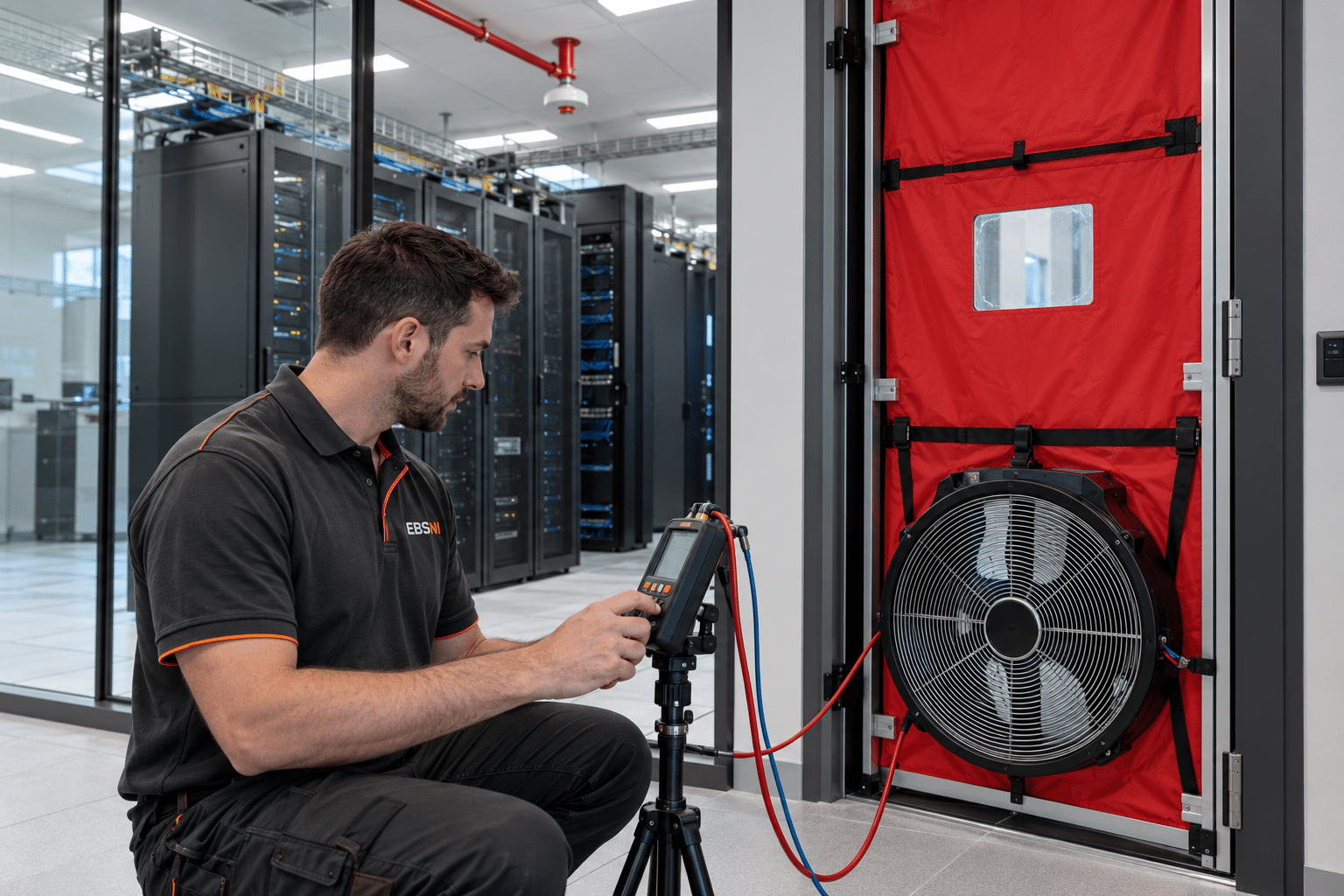
Server rooms, archives and technical spaces
Measured leakage and retention assessment
Commissioning, alterations and maintenance
Site-specific scope and acceptance criteria
What Is
Room Integrity Testing?
A gaseous fire suppression system depends on the protected enclosure retaining the extinguishing agent for the required period. Leakage through the room boundary can affect that retention, including at doors, service penetrations and concealed floor or ceiling interfaces.
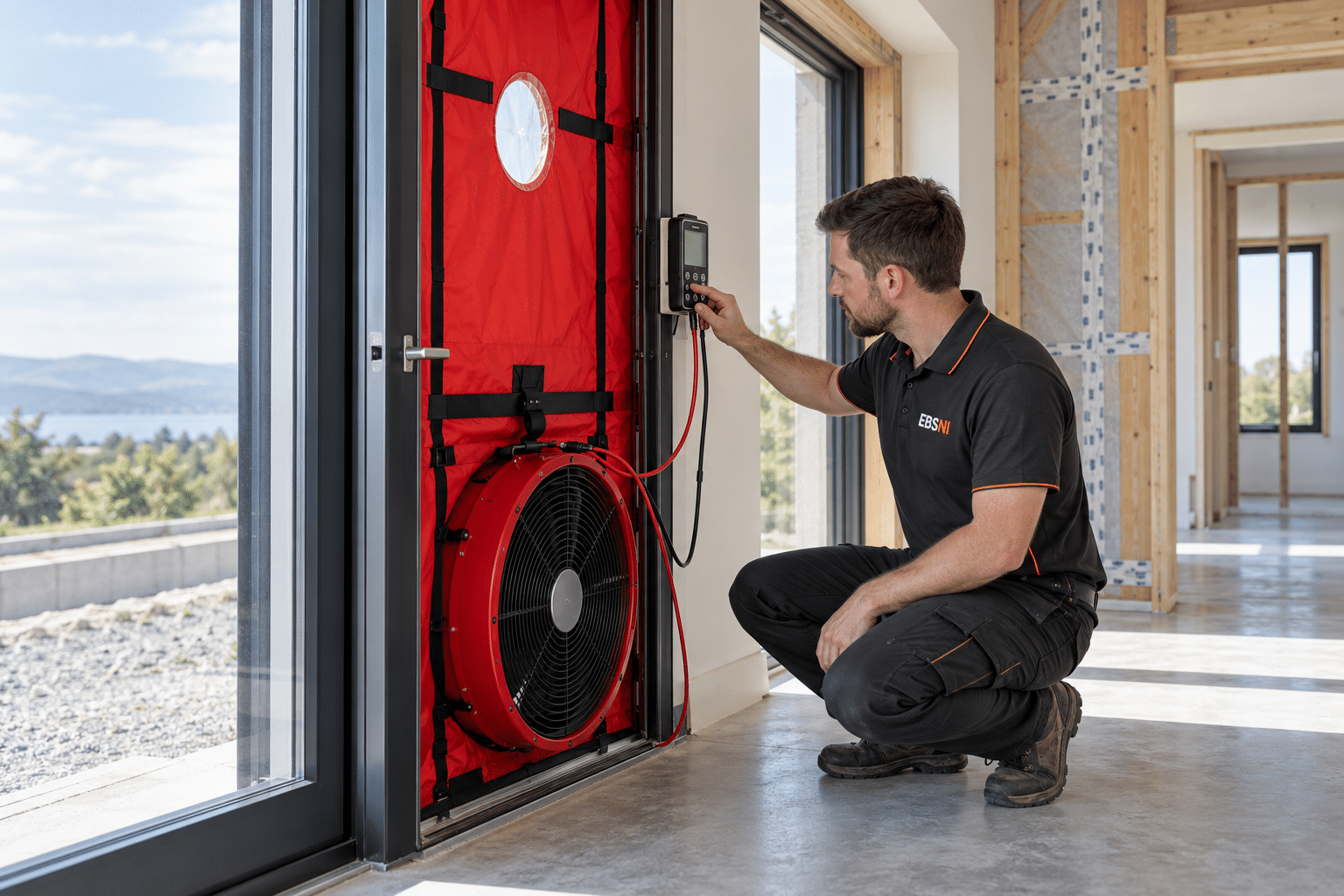
A room integrity test uses a calibrated door-fan setup to measure enclosure leakage. Those measurements, together with the enclosure and suppression design information, support a prediction of agent retention under the agreed method. The door-fan test does not require a discharge of extinguishing agent.
EBSNI agrees the test boundary, criteria and operational arrangements with the client and fire protection team before attending. The report addresses the enclosure assessment within its stated assumptions; it is not a complete test or certification of the suppression system.
Testing for Protected
Operational Spaces.
The protected room, suppression design and maintenance brief determine the test scope. We work with the responsible site and fire protection teams to establish the enclosure boundary and operational arrangements.
Server Rooms & Data Centres
Cable routes, raised floors and changes to equipment can introduce leakage paths or alter the enclosure information.
Provide the current suppression design and previous test records, together with details of changes since the last assessment.
Comms & Technical Rooms
Small equipment rooms may contain multiple service penetrations, doors and ventilation interfaces within the protected boundary.
Confirm what is included in the suppression enclosure and arrange access to the relevant interfaces.
Archives & Storage Enclosures
Rooms protecting records or other sensitive contents need an enclosure assessment matched to the installed gaseous system.
Agree the access and protection arrangements for contents, along with the required retention criteria and room configuration.
Plant & Specialist Spaces
The room configuration, ventilation operation and protected equipment can affect the assessment scope and test conditions.
The suppression designer and maintenance team should confirm the applicable criteria and any operational constraints before testing.
Relevant system frameworks include ISO 14520, EN 15004 and NFPA 2001 where applicable. The installed agent, design standard, required retention criteria and report method must be confirmed for the site. An annual enclosure review and a full door-fan retest are not automatically the same requirement; repeat testing is established from the applicable standard, changes, maintenance brief and other site obligations.

Coordinate the Test
with the Site Team.
Room integrity testing is planned around an operational building. Agree the access window, protected boundary and test configuration with the facilities team and appointed fire protection contractor before the visit.
Changes to doors, walls, cable penetrations, raised floors or ceiling voids can affect the previous assessment. Keep a record of alterations and ask the responsible fire protection team whether the enclosure needs review or retesting.
From Enclosure Brief
to Integrity Report.
We establish the design information and operating constraints first, then test the agreed enclosure and report the measured leakage and resulting assessment.
Confirm the Enclosure
We review the location, room boundary, suppression design information, acceptance criteria and previous reports.
→Agree Site Readiness
The client and appointed fire protection team confirm access, test configuration and authorised operational arrangements.
→Measure the Leakage
The door-fan setup is used to measure leakage under the agreed method. Relevant enclosure observations and test conditions are recorded.
→Review the Findings
We report the agreed retention assessment and limitations. Where necessary, the responsible team arranges remedial sealing and a further test.
✓Preparing Your
Protected Enclosure.
Send the design and existing test information before booking. The responsible site and fire protection personnel should confirm that the agreed configuration and access can be provided.
Common Questions.
What does the door-fan test confirm?
It measures enclosure leakage and supports a prediction of agent retention using the agreed method and supplied suppression design information. The assessment is compared with the specified criteria. It does not test every function of the suppression system or guarantee the outcome of a real fire.
Does room integrity testing release the extinguishing gas?
The door-fan leakage test does not require an extinguishing-agent discharge. Site access, system status and any operational arrangements must still be agreed with authorised facilities and fire protection personnel before the test.
Is a full room integrity test required every year?
Enclosure integrity needs ongoing review under the applicable suppression standard and maintenance arrangements. An annual inspection or review is not automatically an annual full door-fan retest in every case. The test interval and triggers must be confirmed for the installed system, site obligations and any alterations.
What changes can mean a retest is needed?
Alterations to the protected boundary or room configuration can affect the previous assessment. Examples include new cable penetrations, door changes, building works or changes involving floor and ceiling interfaces. Notify the responsible fire protection team so the need for review or retesting can be established.
What happens if the required retention is not demonstrated?
We report the findings and relevant leakage observations to the project team. The responsible parties investigate and arrange any necessary sealing or other corrective work, followed by a further test where required. A satisfactory result cannot be promised before testing.
Can the room remain operational during testing?
This depends on the facility, suppression system and required test configuration. We agree access and operating constraints with the client and fire protection contractor in advance. Uninterrupted operation should not be assumed, and authorised personnel remain responsible for operational controls and reinstatement.


One Protected Room.
A Documented Assessment.
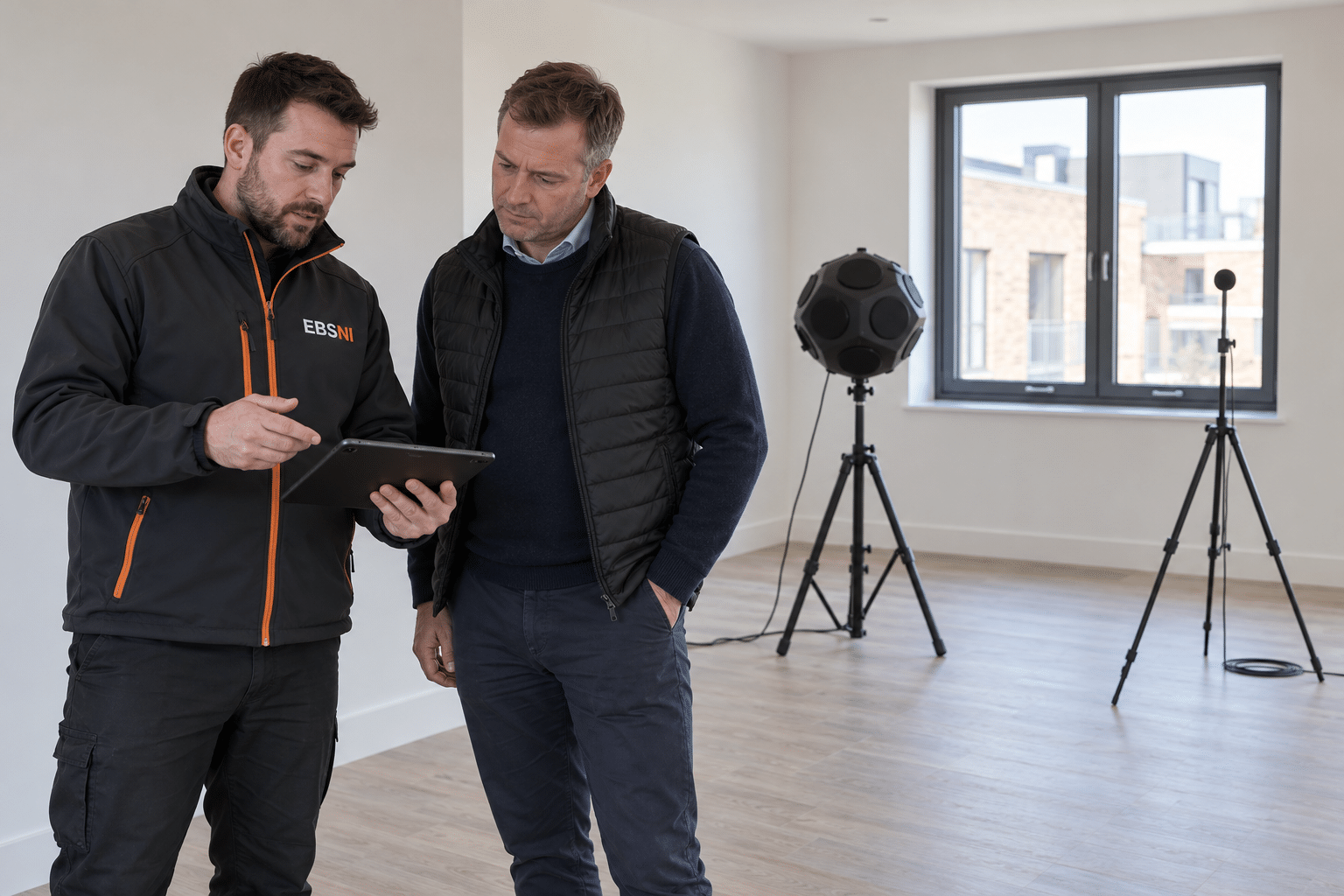
For a server room with gaseous suppression, the facilities and fire protection teams confirm the protected boundary, design information and required test configuration. The door-fan test then provides the leakage measurements for the agreed retention assessment, with findings recorded for review and any corrective action.
Discuss Your ProjectArrange Your Room Integrity Test
Send the location, room details, suppression design information and required date. We will confirm the appropriate test scope. Part of the Newell Group.